When to Dive in the Maldives?
In the Maldives, choosing your time to travel is not simply a matter of weighing the dry season against the rainy season. The monsoons change the currents, the amount of plankton and the distribution of certain species across the archipelago. The result: a period that is less favorable weather-wise can become particularly interesting for watching mantas, while the best atoll depends as much on the animals you are looking for as on the type of diving you want. From the thilas of the central atolls to the channels of Vaavu, from the manta gatherings of Baa to the whale sharks of Ari and the big sharks of Fuvahmulah, the Maldives offer a wealth of underwater experiences.
When to Dive
Monthly overview of conditions in this destination.
| Jan | Feb | Mar | Apr | May | Jun | Jul | Aug | Sep | Oct | Nov | Dec | |
|---|---|---|---|---|---|---|---|---|---|---|---|---|
| Climate | ☀️ | ☀️ | ☀️ | 🌤️ | 🌦️ | 🌦️ | 🌦️ | 🌦️ | 🌦️ | 🌦️ | 🌦️ | 🌤️ |
| Air temp. (°C) | 26-30 | 26-30 | 27-31 | 27-32 | 27-31 | 26-30 | 26-30 | 26-30 | 26-30 | 26-30 | 26-30 | 26-30 |
| Water temp. (°C) | 27-29 | 28-29 | 28-30 | 29-30 | 29-30 | 28-30 | 28-29 | 28-29 | 28-29 | 28-29 | 28-29 | 27-29 |
| Peak tourist season | ● | ● | ● | ● | ● | |||||||
| Mantas (depending on the atoll) | ⭐⭐ | ⭐⭐ | ⭐⭐ | ⭐⭐ | ⭐⭐⭐ | ⭐⭐⭐ | ⭐⭐⭐ | ⭐⭐⭐ | ⭐⭐⭐ | ⭐⭐⭐ | ⭐⭐⭐ | ⭐⭐ |
| Whale sharks (South Ari) | ⭐⭐ | ⭐⭐ | ⭐⭐ | ⭐⭐ | ⭐⭐ | ⭐⭐ | ⭐⭐ | ⭐⭐ | ⭐⭐ | ⭐⭐ | ⭐⭐ | ⭐⭐ |
| Tiger sharks (Fuvahmulah) | ⭐⭐⭐ | ⭐⭐⭐ | ⭐⭐⭐ | ⭐⭐⭐ | ⭐⭐⭐ | ⭐⭐⭐ | ⭐⭐⭐ | ⭐⭐⭐ | ⭐⭐⭐ | ⭐⭐⭐ | ⭐⭐⭐ | ⭐⭐⭐ |
| Jan | Feb | Mar | Apr | May | Jun | Jul | Aug | Sep | Oct | Nov | Dec | |
|---|---|---|---|---|---|---|---|---|---|---|---|---|
| Climate | ☀️ | ☀️ | ☀️ | 🌤️ | 🌦️ | 🌦️ | 🌦️ | 🌦️ | 🌦️ | 🌦️ | 🌦️ | 🌤️ |
| Air temp. (°C) | 26-30 | 26-30 | 27-31 | 27-32 | 27-31 | 26-30 | 26-30 | 26-30 | 26-30 | 26-30 | 26-30 | 26-30 |
| Water temp. (°C) | 27-29 | 28-29 | 28-30 | 29-30 | 29-30 | 28-30 | 28-29 | 28-29 | 28-29 | 28-29 | 28-29 | 27-29 |
| Peak tourist season | ● | ● | ● | ● | ● | |||||||
| Mantas (depending on the atoll) | ⭐⭐ | ⭐⭐ | ⭐⭐ | ⭐⭐ | ⭐⭐⭐ | ⭐⭐⭐ | ⭐⭐⭐ | ⭐⭐⭐ | ⭐⭐⭐ | ⭐⭐⭐ | ⭐⭐⭐ | ⭐⭐ |
| Whale sharks (South Ari) | ⭐⭐ | ⭐⭐ | ⭐⭐ | ⭐⭐ | ⭐⭐ | ⭐⭐ | ⭐⭐ | ⭐⭐ | ⭐⭐ | ⭐⭐ | ⭐⭐ | ⭐⭐ |
| Tiger sharks (Fuvahmulah) | ⭐⭐⭐ | ⭐⭐⭐ | ⭐⭐⭐ | ⭐⭐⭐ | ⭐⭐⭐ | ⭐⭐⭐ | ⭐⭐⭐ | ⭐⭐⭐ | ⭐⭐⭐ | ⭐⭐⭐ | ⭐⭐⭐ | ⭐⭐⭐ |
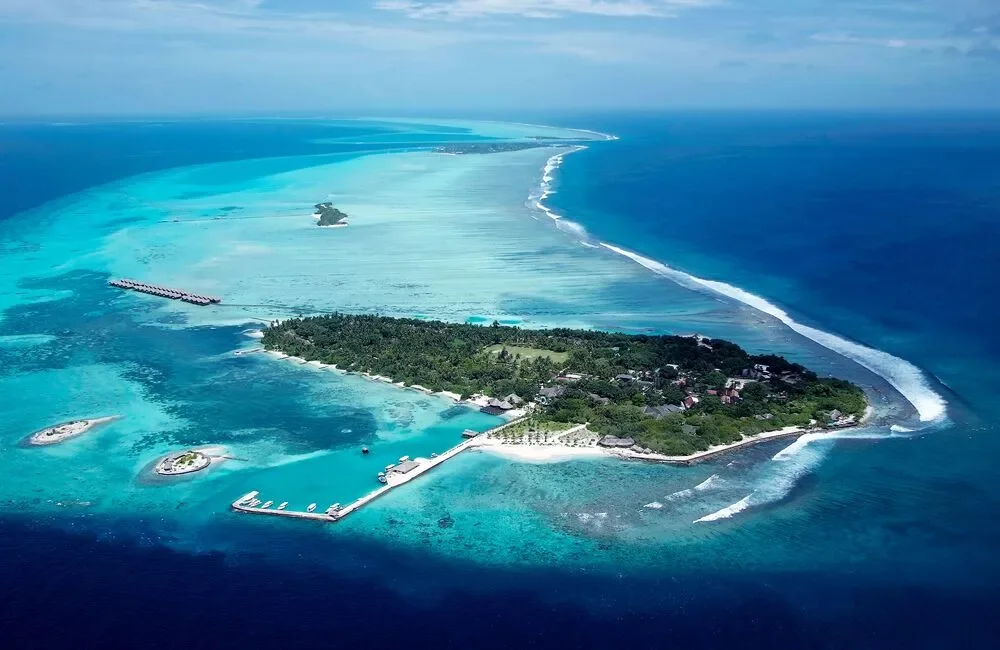
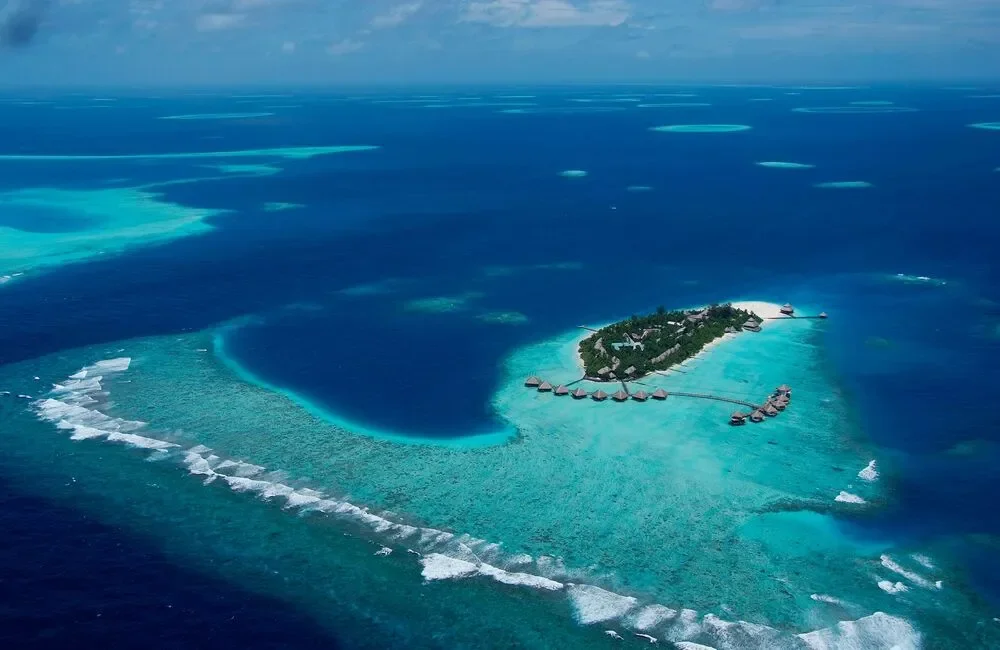
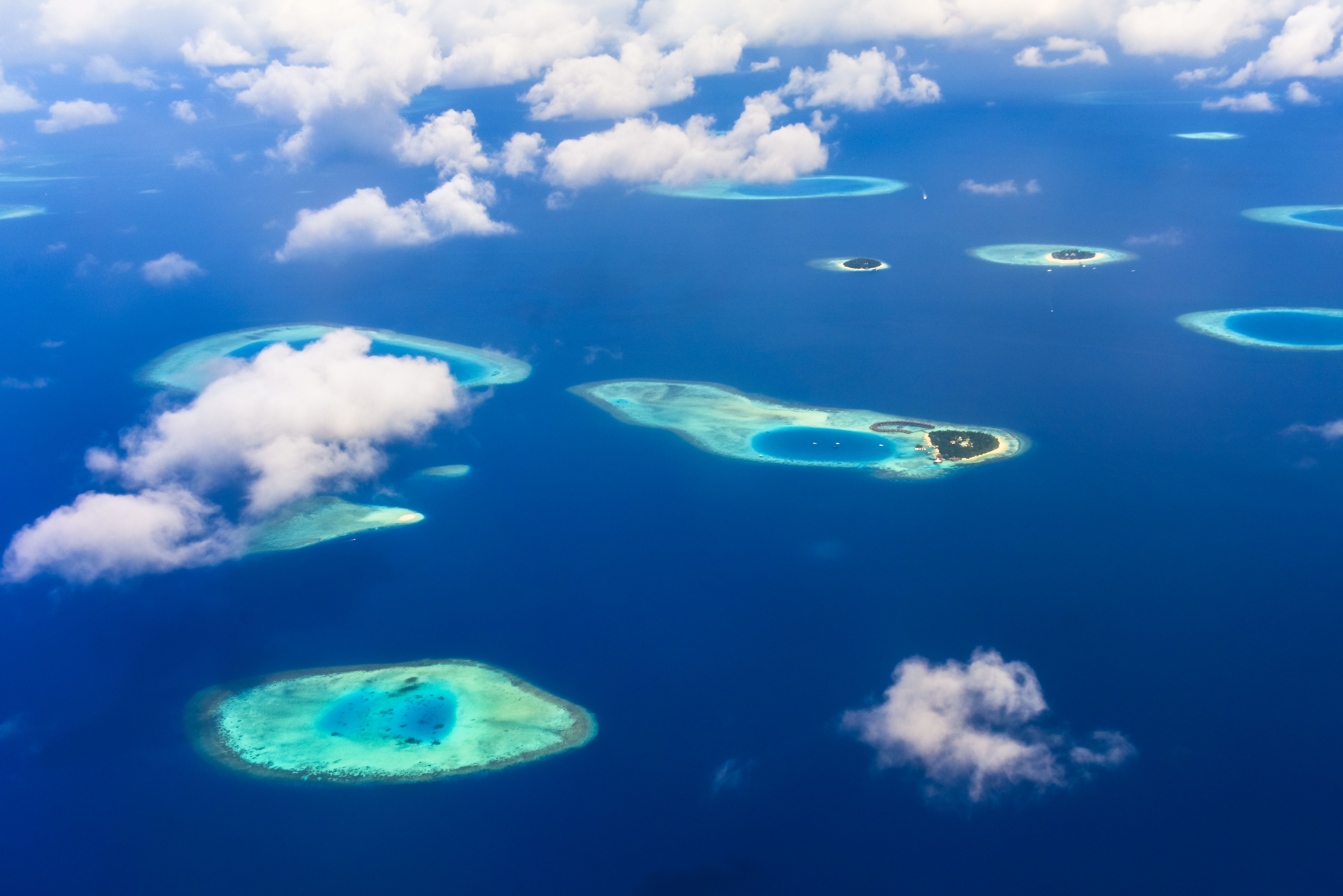
The Maldives form a long chain of atolls in the heart of the Indian Ocean, stretching about 870 kilometers from north to south. This geography largely explains the variety of dives.
Two words come up particularly often in Maldivian diving vocabulary: thilas and kandus.
Thilas are submerged reefs or pinnacles, sometimes covered in soft corals, with overhangs or caverns. Kandus are the channels that connect the ocean to the lagoons of the atolls.
This is what gives the Maldives much of their personality. One dive may circle a thila swarming with fish, the next may drift through a channel with gray reef sharks and eagle rays, then wait for a manta at a cleaning station.
But conditions are not the same everywhere. Malé, Ari, Baa, Vaavu or Fuvahmulah are not just different names attached to the same kinds of dives. Some atolls stand out for their channels, others for the seasonality of their mantas, their whale sharks, their wrecks or a far more direct exposure to the open ocean.
Climate
The Maldivian climate is hot and humid all year round, with air temperatures generally between 25 and 32 °C. Seasonal variations are relatively small.
The real rhythm of the year is set by the two monsoons.
The northeast monsoon, generally the drier one, mainly prevails from January to March. The southwest monsoon, which is wetter, normally runs from mid-May to November. April and December are more transitional periods between the two regimes.
That doesn't mean it rains constantly between May and November. The Maldivian weather services report that rainfall often comes as showers interspersed with sunny spells. They also note higher annual rainfall in the southern atolls than in the central and northern ones.
January, February and March enjoy more hours of sunshine on average, while March and April are among the hottest periods of the year.
Underwater, the temperature varies little over the year, averaging close to 28 °C across the archipelago.
The southwest monsoon brings more rain and wind, but it also directly influences underwater conditions. By changing the currents, it alters the distribution and concentration of plankton around the atolls.
This more nutrient-rich water can occasionally reduce visibility, but it also attracts certain large filter feeders.
In the Maldives, the driest months are therefore not automatically the best for diving: weather, visibility and marine life don't always move in the same direction
Diving conditions
The Maldives can be dived all year round, but conditions can change considerably depending on the atoll, the reef, the tide and the monsoon.
Current plays a central role.
Diving in the channels can lead to impressive drift dives. Some dives are also made by positioning yourself at the mouth of a kandu to watch gray reef sharks, eagle rays, tuna and schools of fish that take advantage of the current too.
Thilas offer another kind of dive. Their top may lie in shallow water while their sides drop much deeper. The current then flows around the reef and often concentrates life on the exposed side.
The Maldives have a vast list of dive sites, allowing divers of all levels to enjoy the destination. Sheltered reefs and lagoons make for accessible dives, while certain channels, deep thilas and southern dives require real comfort in current.
Monsoons, currents and visibility
Monsoons don't just change the weather at the surface: they also reverse the dominant circulation around the archipelago. Oceanographic research shows that this seasonal circulation changes the distribution of plankton around the atolls.
This is notably what explains the movements of mantas. Studies carried out in the Maldives show that they concentrate more on the sides of the atolls where plankton accumulates, then change sector when the monsoon reverses.
Visibility therefore can't be summed up by a single value for the whole of the Maldives. It depends on the season, but also on which side of the atoll you dive and on the amount of plankton present.
Wildlife and marine life
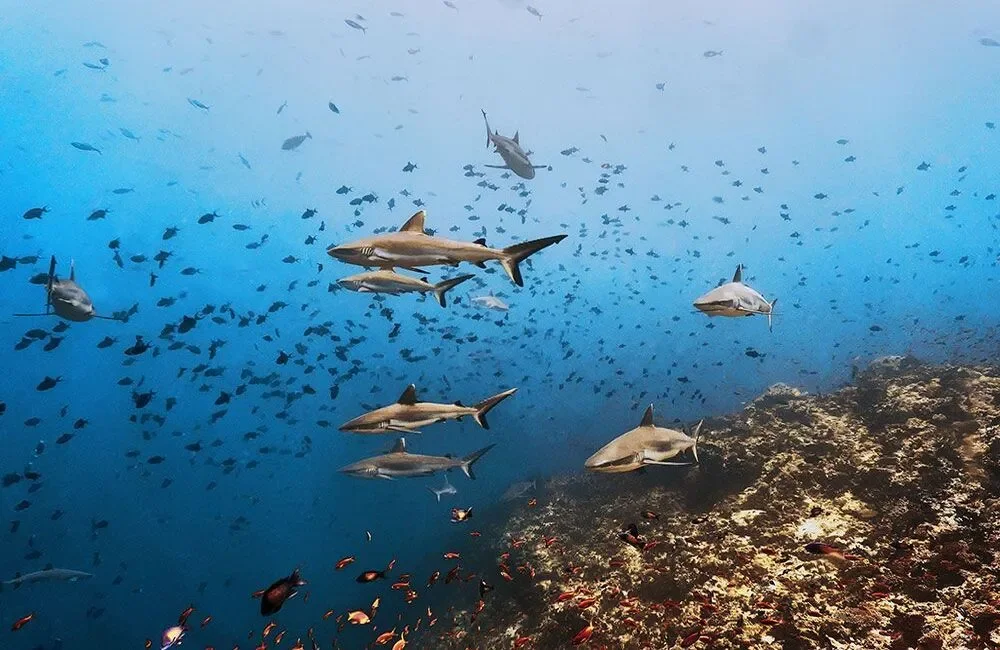
Gray reef sharks, whitetip reef sharks, eagle rays, turtles, Napoleon wrasse, trevally, tuna, barracuda and huge schools of fish are found in many atolls.
But two animals in particular shape the seasonality of diving trips to the Maldives: mantas and whale sharks. Further south, the diversity of large sharks also becomes a reason in its own right to choose the destination.
Mantas
Reef manta rays are resident in the Maldives, but they move across the archipelago following seasonal changes in plankton. It is therefore possible to meet them all year round in the Maldives, but not necessarily in the same place.
This is probably one of the key pieces of information for understanding the destination.
At Baa, the large manta gatherings at Hanifaru Bay are associated with the southwest monsoon, mainly from May to December, with a particularly marked peak between July and September.
Note, however, that Hanifaru Bay itself cannot be dived with a tank: regulations only allow manta watching by snorkeling there. Baa does, however, have many other sites where you can dive with mantas.
At North Malé, Lankan Manta Point is mostly visited from May to November.
At Ari, mantas change sector over the course of the year: in South Ari they are mainly seen on the east coast, around Mahibadhoo, from June to November, then more on the west coast, around Rangali and Moofushi, from January to May.
At Raa, the same principle applies: the best areas are mostly on the west of the atoll from December to April, then on the east from May to November.
So there isn't really a single "manta season in the Maldives". There is above all a manta season that differs by atoll and by sector.
Whale sharks
The whale shark is a different case.
South Ari is a zone of global importance where whale sharks are seen all year round. The work of the Maldives Whale Shark Research Programme found no significant annual seasonality in the number of individuals present in the South Ari Marine Protected Area.
Of course, this doesn't mean that an outing guarantees an encounter.
Whale sharks also move within the atoll and between different regions of the Maldives. But unlike many destinations where their presence is limited to a few months, South Ari makes it reasonable to look for them at any time of year.
Sharks
The Maldives also offer a particularly interesting diversity of sharks.
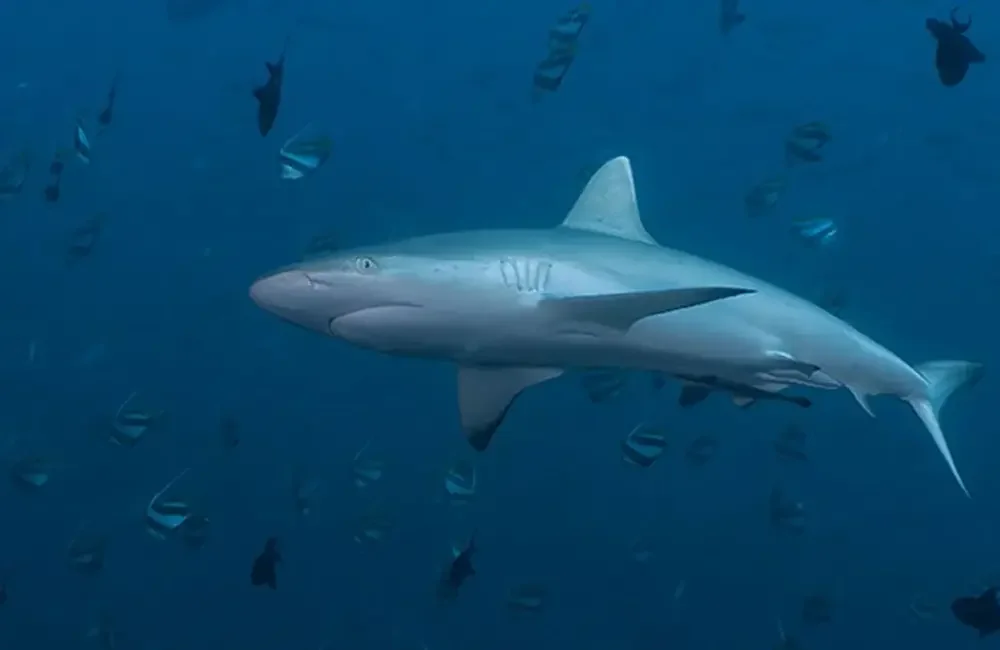
In the central atolls such as Malé, Vaavu or Ari, gray reef sharks and whitetip reef sharks are mainly associated with channels and reefs swept by current.
Heading down to the far south, the experience changes.
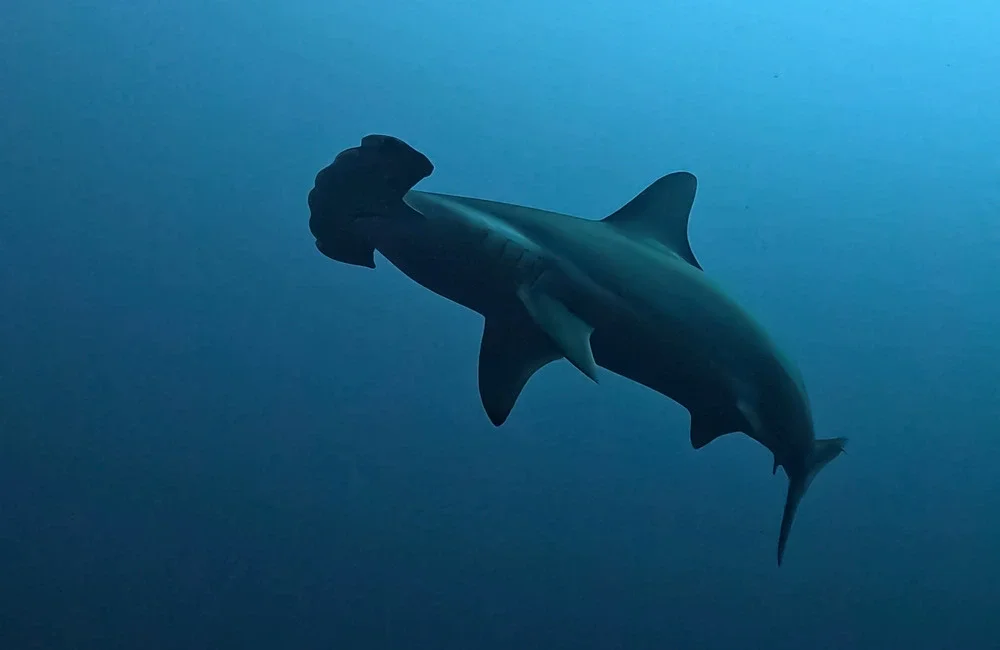
Fuvahmulah has established itself as a destination specializing in large pelagics, notably tiger sharks, thresher sharks and several other shark species.
Where to dive in the Maldives?
The Maldives offer enough differences between atolls for the choice of area to have a real influence on the trip.
Some, like Malé, Ari, Baa, Vaavu or Fuvahmulah, have an identity strong enough to be covered separately. Beyond the best-known atolls, the Maldives have many dive areas with different atmospheres, from the north of the archipelago to the southernmost atolls.
Malé
The North and South Malé atolls are the main gateway to Maldivian diving. Their proximity to the airport makes transfers easy and gives quick access to a wide variety of thilas, channels and reefs.
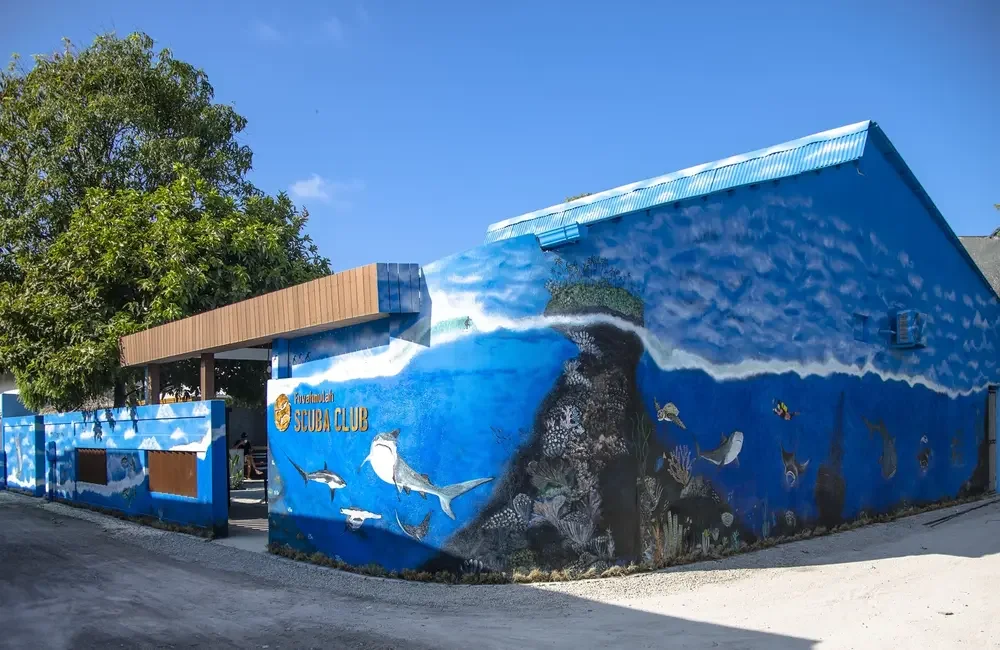
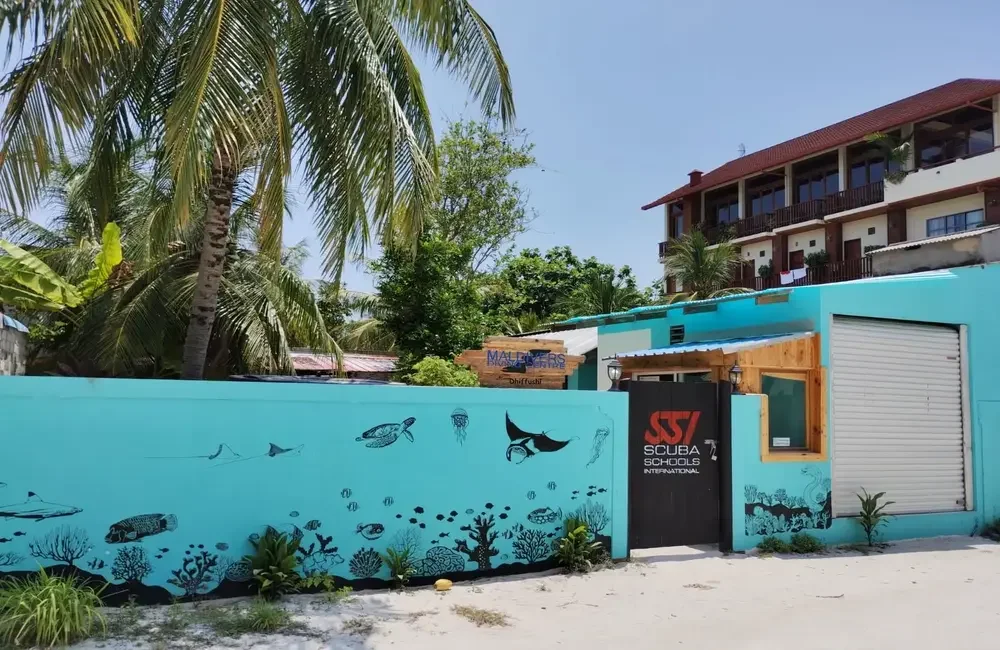
In the north, islands such as Himmafushi, Hudhuranfushi and Dhiffushi serve as bases for exploring this part of the atoll. Further south, Guraidhoo, Rannalhi and Vadoo open more onto the channels of South Malé, where currents play an important role in the dives and in encounters with reef sharks and other pelagics. Malé is, in fact, among the Maldivian areas particularly well known for this kind of encounter.
Ari
Ari is one of the major diving regions of the Maldives, but the experience changes markedly between north and south.
In the north, Ukulhas is a notable dive base, while Dhigurah, much further south, lies directly in the region known for whale sharks. The South Ari Marine Protected Area is indeed one of the few places in the world where their presence is documented all year round. Reef sharks and mantas add to the atoll's appeal, with a distribution of mantas that shifts with the monsoons.
Rasdhoo and Thoddoo, north of Ari
North of the main Ari group, Rasdhoo and Thoddoo offer another side of Maldivian diving.
Rasdhoo stands out for its channels, its current-swept reefs and possible encounters with sharks and other pelagics. The area is especially appreciated for dynamic dives where life concentrates around the channels.
Thoddoo, further northwest, offers a more island-like setting, with accessible reefs around the island and trips to explore the neighboring areas. The island is an interesting base for discovering this northern part of the archipelago while enjoying an atmosphere different from the big resorts.
Baa
The Baa atoll stands out for a particularly marked seasonality, notably linked to manta movements and plankton variations over the year.
Dives in the atoll let you explore reefs, thilas and channels, with wildlife that changes with the monsoon. Maalhos is a good base for discovering this part of Baa, while Fulhadhoo, further southwest, offers a more isolated setting and a different atmosphere.
The region is also known for Hanifaru Bay, famous for its seasonal manta gatherings, although observation there is done by snorkeling and not by scuba diving.
At Baa, the time of your trip therefore strongly influences the conditions and the encounters you can have, particularly with mantas.
Raa, Lhaviyani and the northern atolls
Continuing north, Raa, Lhaviyani and Noonu let you explore a side of the Maldives less directly associated with the main Malé and Ari itineraries.
At Raa, the island of Meedhupparu is a notable dive base. The region also has a seasonality linked to mantas, whose areas of presence change with the monsoons.
Further east, Lhaviyani is an atoll marked by its channels and the exchanges between lagoon and ocean. Naifaru, the atoll's capital, is one of the inhabited islands from which this region can be explored. Fushifaru Kandu, at the northeastern tip of the atoll, illustrates this configuration well: this sheltered channel is home to a cleaning station frequented by mantas.
Vaavu
Vaavu stands out for its channels and for dives largely shaped by currents.
Kandus play a central role there: when water rushes into the channels, it concentrates marine life and favors encounters with gray reef sharks, eagle rays and other pelagics. Dives there are therefore often more dynamic and more current-oriented than in areas like Baa or Ari.
Vaavu is particularly interesting for divers looking for active channels, open blue water and shark encounters.
Huvadhoo and Addu: the big southern atolls
Much further south, Huvadhoo and Addu start to tip Maldivian diving toward a more oceanic world, clearly removed from the classic circuits of the central atolls.
Channels and exchanges with the open sea play an important role there, while pelagic fauna takes up more space. Addu also has its own particularities, notably manta sites and the wreck of the British Loyalty.
Fuvahmulah
Between Huvadhoo and Addu, Fuvahmulah is a case entirely apart.
Unlike most Maldivian destinations, it is not a set of sheltered reefs inside a large atoll, but an isolated island directly exposed to the ocean.
This makes it one of the most specialized destinations in the Maldives for large pelagics, and notably for tiger sharks, joined by several other shark species.
Island stay or liveaboard?
Both approaches work particularly well in the Maldives, but they suit different wishes.
Staying on an island lets you explore a single atoll more thoroughly, return to certain sites and combine diving with the rest of your stay. Depending on the destination, dives can be organized from a resort or from a local island.
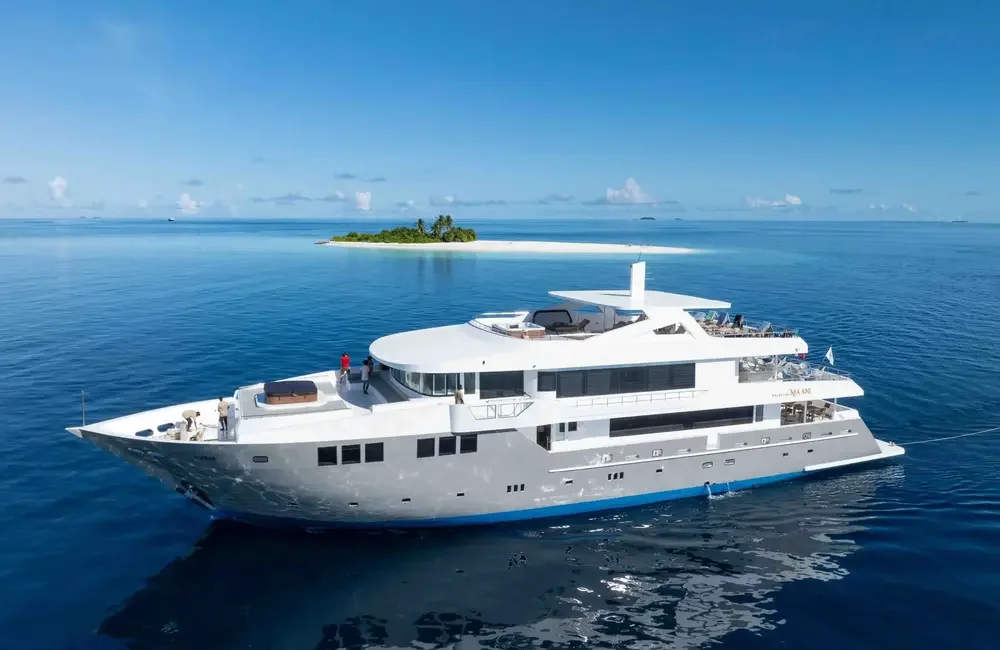
A liveaboard, on the other hand, lets you cross several atolls and more easily follow conditions, currents and the areas where animals gather. The central itineraries linking Malé, Ari and Vaavu are a classic way to discover several types of diving in a single trip.
There is therefore no intrinsically better option: it depends on your time, your budget and the kind of vacation you want.
FAQ
What is the best time to dive in the Maldives?
There is no single answer that suits every diver.
January to March is the driest part of the year, with more sunshine. But the southwest monsoon, from mid-May to November, can be particularly interesting for mantas and other species attracted by plankton.
The best time therefore depends first of all on the atoll you choose and what you want to see.
Can you dive in the Maldives during the rainy season?
Yes, and this period can even be particularly interesting depending on the atoll and the animals you are after.
The southwest monsoon brings more rain and wind, but it also changes the currents and increases the plankton concentration in some areas. Visibility can then be lower, while the chances of seeing mantas or other large filter feeders go up.
This is notably the case at Baa, where the manta gatherings at Hanifaru Bay are precisely associated with this period.
In the Maldives, less crystal-clear water can sometimes bring the best encounters.
Which atoll is best for seeing mantas?
It depends on the time of year.
Baa is particularly famous during the southwest monsoon thanks to the gatherings at Hanifaru Bay (by snorkeling). But mantas move around the archipelago with the monsoons and are also regularly seen at Ari, Malé, Raa, Addu and other atolls.
The right question is therefore not just "where can I see mantas?" but rather "where can I see mantas when I'm traveling?".
What is the best time to see whale sharks?
If the main goal is the whale shark, South Ari is a special case: sightings are possible all year round, and the available studies don't identify any significant annual seasonality in their abundance within the protected area.
It is, of course, still an encounter with a wild animal and never a guarantee.
Which atoll should you choose for a first diving trip to the Maldives?
No atoll is universally better than the others.
Malé offers plenty of variety and easy access. Ari combines thilas, mantas and the chance to look for whale sharks. Baa becomes especially interesting if the manta season matches your travel dates. Vaavu will suit those looking for channels and current dives, while Fuvahmulah fits a project far more focused on large sharks.
That's precisely why in the Maldives, choosing the atoll before choosing the hotel is rather a good idea when diving is the point of the trip.
Where can you see sharks in the Maldives?
Sharks are present in many atolls, but the species and the type of encounter vary greatly from region to region.
In the central atolls such as Malé, Ari or Vaavu, channels and current-exposed reefs are particularly favorable to gray reef sharks and whitetip reef sharks. Vaavu is especially renowned for its channel dives, where sharks can gather when the current is right.
Further south, Fuvahmulah offers a very different experience, more focused on large pelagics and notably tiger sharks, joined by several other species.
The choice of area therefore depends a lot on the kind of shark you are looking for.
Partner dive centers in this destination
+ List my centerBook directly with our verified dive centers.